The post FACTORY AND WAREHOUSE FLOOR, WALLS AND EXTERNAL PAVING REPAIRS appeared first on FCS Concrete Repairs.
]]>FCS Concrete Repairs have the experience in all facets of concrete repair:
- Concrete Floor Repair and Crack Injection
- Concrete Wall Repair and Crack Injection
- Joint Filling
- Reinforced Concrete Replacement
- Concrete Patch Repairs
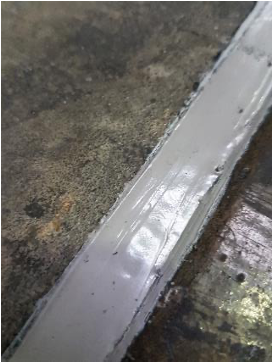
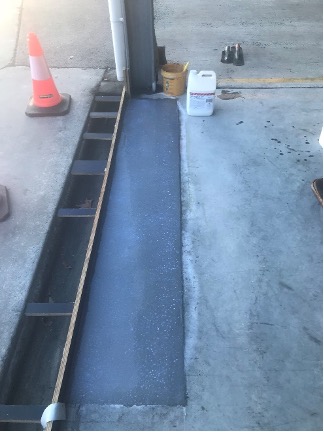
- Flexible Concrete Infills Across Joint [Latest Technology – Elastomeric Concrete]
- Delaminated Concrete Topping Repair
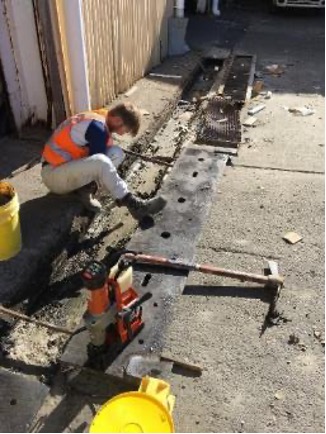
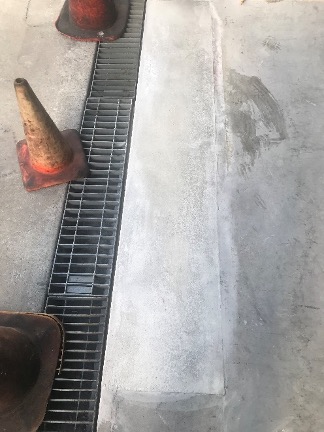
- Grated Drain Repair
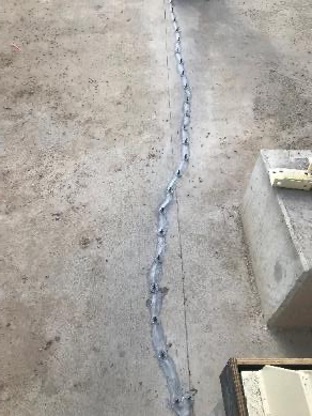
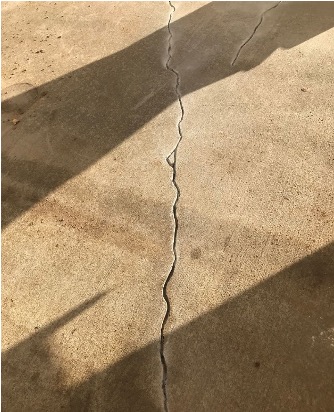
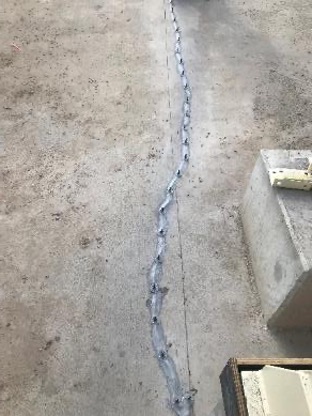
Does this look like your factory or warehouse floor or your external paving?
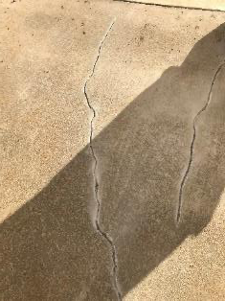
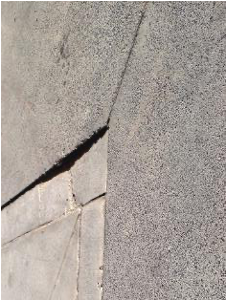
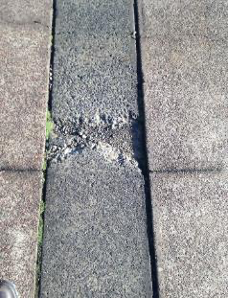
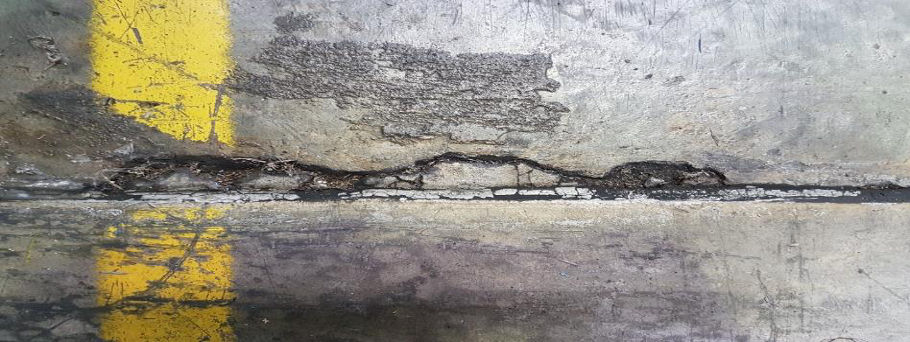
Typically, concrete floors in factories and warehouses require repair due to:
- Forklift damage
- Cracking
- Joint failure
- Surface delamination, scaling, dusting
- Sub-base subsidence, wash-outs, voids
- Chemical damage
- Design issues
- Wear and tear
If your factory or warehouse floors are affected by any of these issues then FCS Concrete Repairs have the experience and expertise to investigate, test, diagnose and recommend the most cost effective course of action to repair the floor and mitigate any further deterioration or future damage.
Concrete floors suffer this damage due to a large number of contributing causes:
- Forklift damage to floor joints and floor areas
- Heavy Loading damage to floors
- Failure when design limits are exceeded
- Subsidence of the sub-base
- Washout of the sub-base
- Poorly compacted sub-base
- Structural cracking
- Cold storage damage to floors
- Machinery loading on floors
- Machinery vibration impacts
- Concrete dusting
- Concrete wear and tear
- Rusting of internal reinforcement steel
- Potholes
- Floor demarcation line and safety marking wear
- Ingress of water
- Chemical damage
- Ground movement
- Stress loadings
- Temperature changes
- Product contamination of floor surface
- Delamination of concrete toppings
- Surface scaling
- Deterioration of applied coatings
- Plastic shrinkage cracking
- Overworking of surface during concrete placing
- Inadequate curing
- Premature surface sealing during concrete placing
- Improper concrete compaction
- Excessive moisture loss during concrete placing
- Poor structural design
It is important to determine the root cause of the concrete failure and develop a strategy to remedy the cause and complete an effective repair with a minimum of disruption to operations by delivering the best possible outcome.
FCS Concrete Repairs have a strong knowledge base to ensure that any repairs are effective. Our extensive prior experience in concrete construction, concrete repair techniques, selection of the appropriate repair methods and the right repair materials for the job will ensure a quality repair. There are a wide range of repair materials and selection of the correct material and methodology is critical to a successful outcome.
FCS Concrete Repairs repair techniques include:
Concrete Floor Repair and Crack Injection
Concrete Wall Repair and Crack Injection
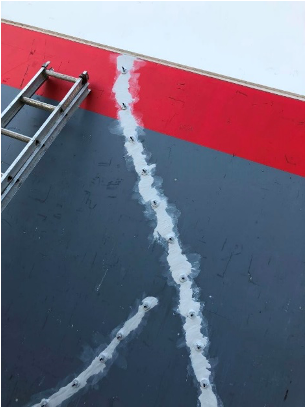
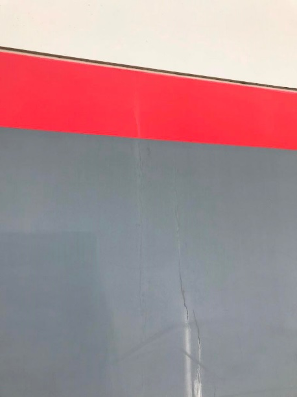
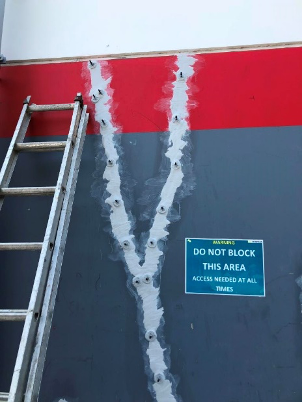
Joint Filling
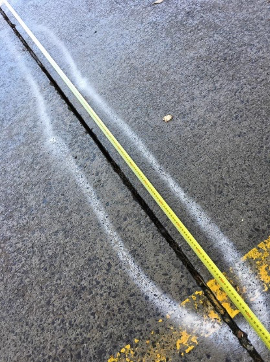
Reinforced Concrete Replacement
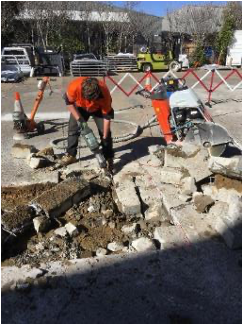
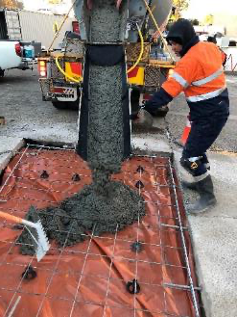
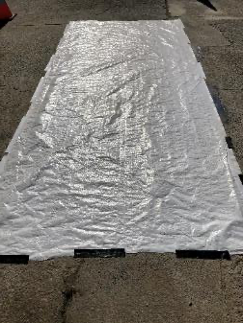
Concrete Patch Repair
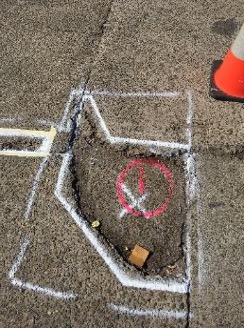
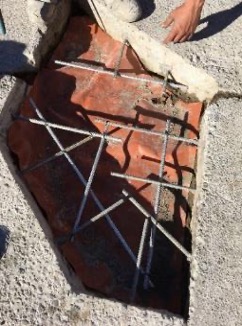
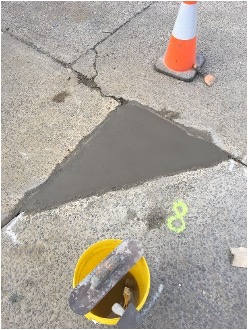
Flexible Concrete Infills Across Joint [Latest Technology – Elastomeric Concrete]
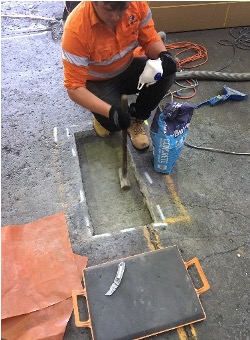
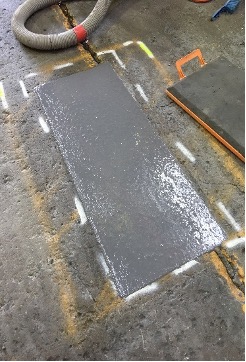
Delaminated Concrete Topping Repair
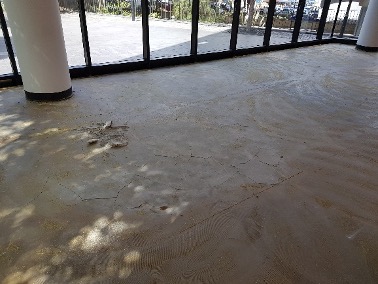
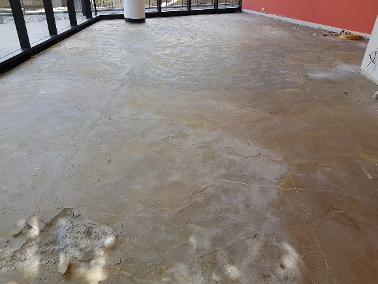
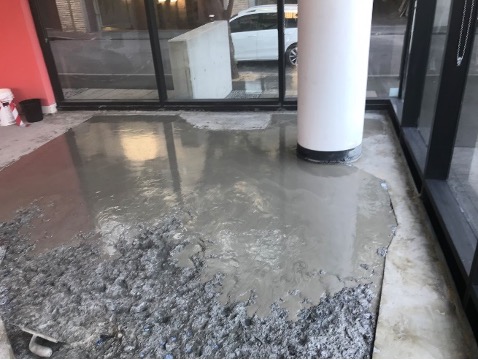
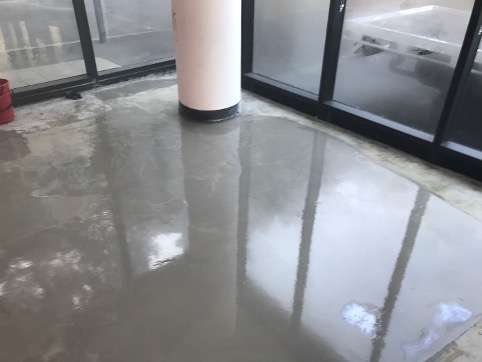
Grated Drain Repair
FCS Concrete Repairs are members of ACRA, the Australasian Concrete Repair Association.
FCS Concrete Repairs are the Preferred and Approved Contractors to the major material suppliers such as Prime Resins in the USA, Parchem, Sika, Epirez, International, Fosroc, Dulux and Thorhelical Remedial Solutions.
FCS Concrete Repairs are quality accredited:
REPUTATION FOR QUALITY
Our reputation is important to us and is built upon experience and an understanding of the importance of the full and thorough preparation of the repair area. Inadequate preparation and short cuts are not the answer to an effective repair and a sound LONG TERM solution.
THE CHEAPEST PRICE IS NOT ALWAYS THE ANSWER but FCS Concrete Repairs can offer a competitive solution without sacrificing quality.
If your property is in need of repair please contact us, firstly, for an inspection, secondly, for advice and, thirdly, for our recommended solution and competitive quotation.
The post FACTORY AND WAREHOUSE FLOOR, WALLS AND EXTERNAL PAVING REPAIRS appeared first on FCS Concrete Repairs.
]]>The post What Is Elastomeric Concrete? appeared first on FCS Concrete Repairs.
]]>The properties which are most important for these materials are flexibility, elasticity, and bond strength.
Flexibility and elasticity allow the material to absorb shock caused by traffic impacting on the extrusions.
Bond strength to the adjacent surface is critical in all conditions, both wet and dry.
Obtaining adequate flexibility and bond strength together in one material is difficult but has been achieved with this material.
The key characteristics
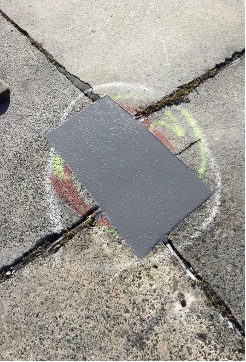
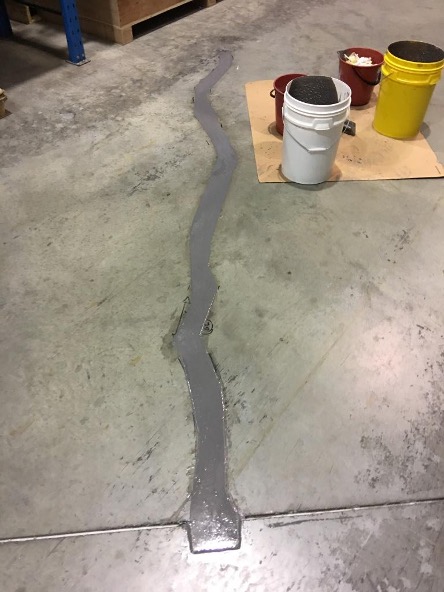
Elastomeric Concrete provides a flexible patch with excellent adhesion that will deflect as surrounding concrete expands and contracts and can resist heavy pressure before deflecting. The critical point is that Elastomeric Concrete allows itself to return to its original state after deflection.
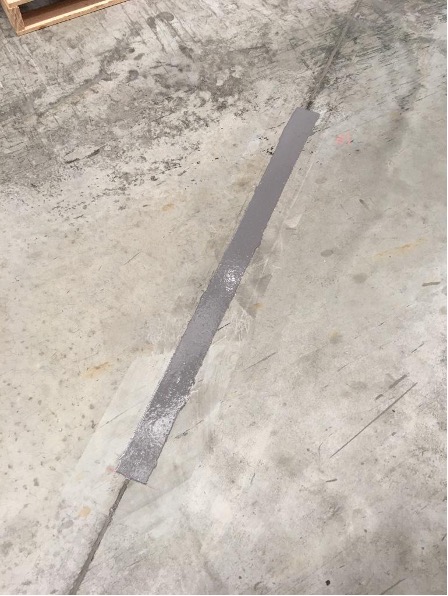
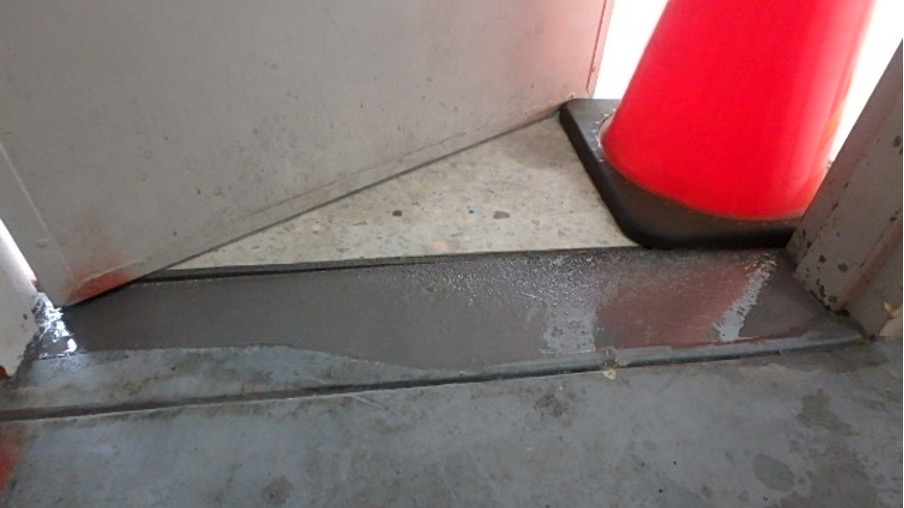
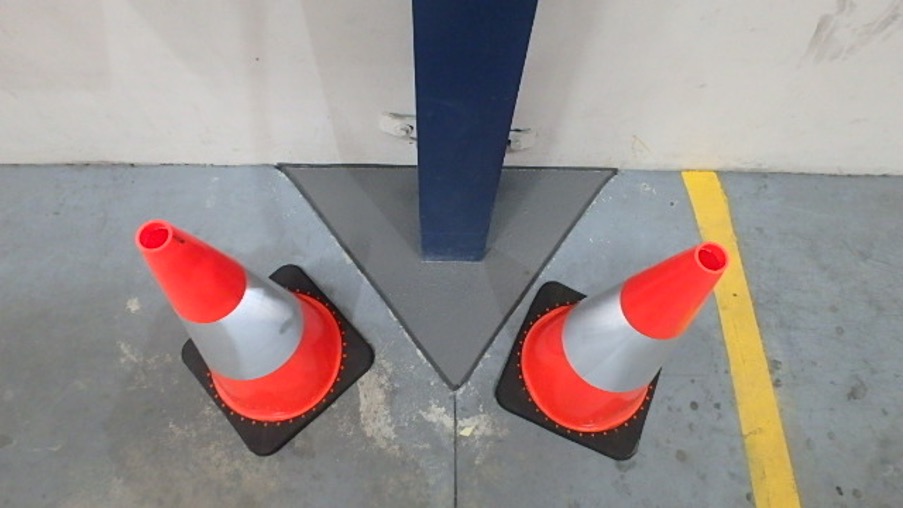
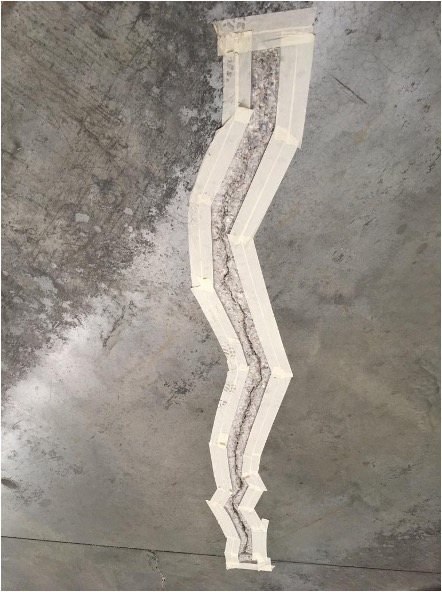
FCS Concrete Repairs has successfully used Elastomeric Concrete for repairing and patching concrete floors. This includes patching across expansion joints without the need for expensive joint reconstruction or major concrete removal.
The following project photos illustrate the advantages of Elastomeric Concrete patching material:
A Patch Across an expansion joint
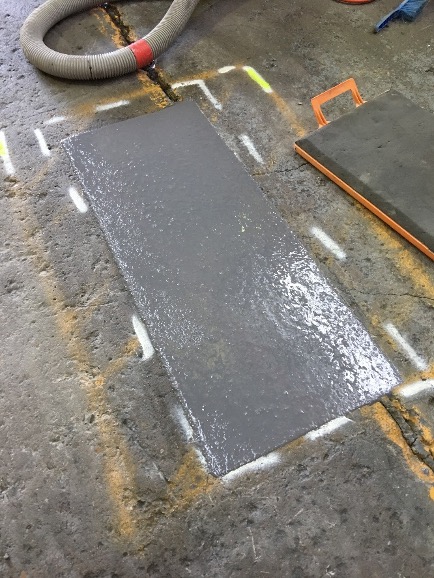
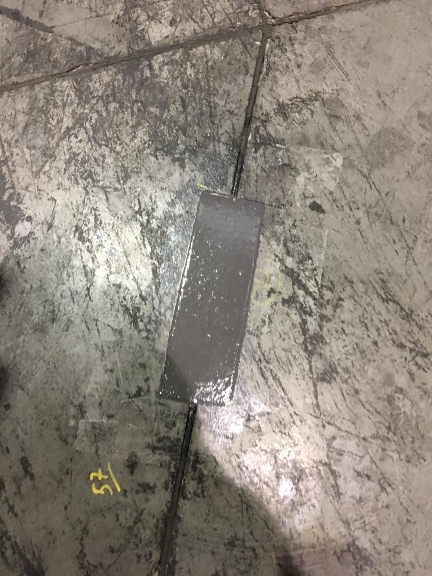
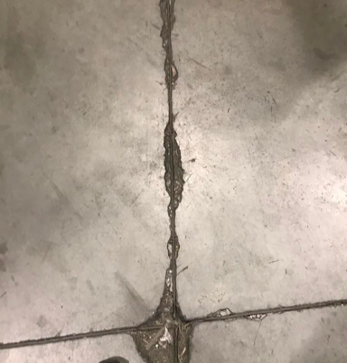
A Patch at the intersection of several expansion joints
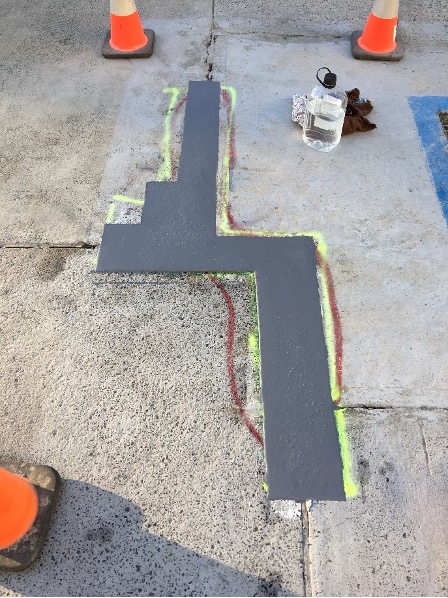
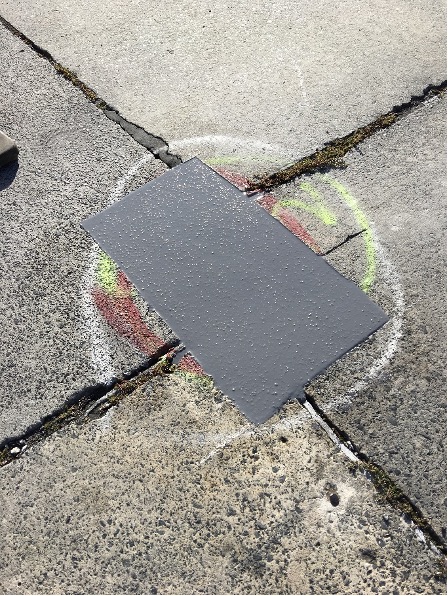
A Patch along an expansion joint
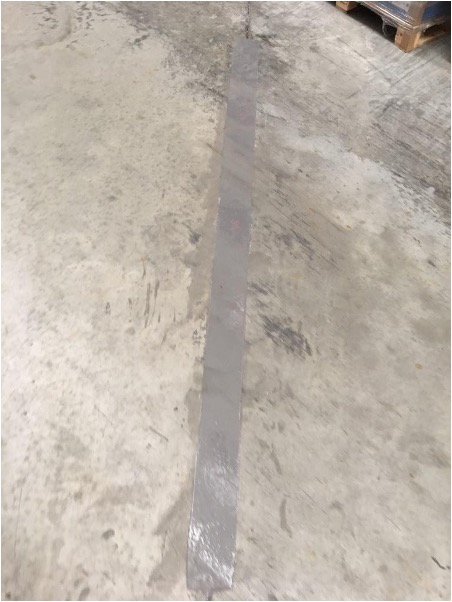
A Patch at an entry threshold
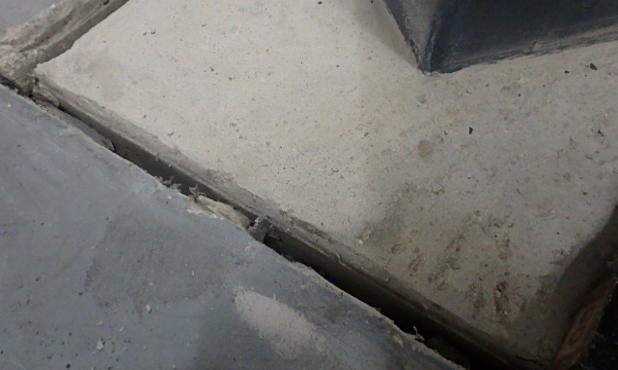
A Patch at a column base
A Patch along an irregular crack
The post What Is Elastomeric Concrete? appeared first on FCS Concrete Repairs.
]]>The post Concrete Crack Injection appeared first on FCS Concrete Repairs.
]]>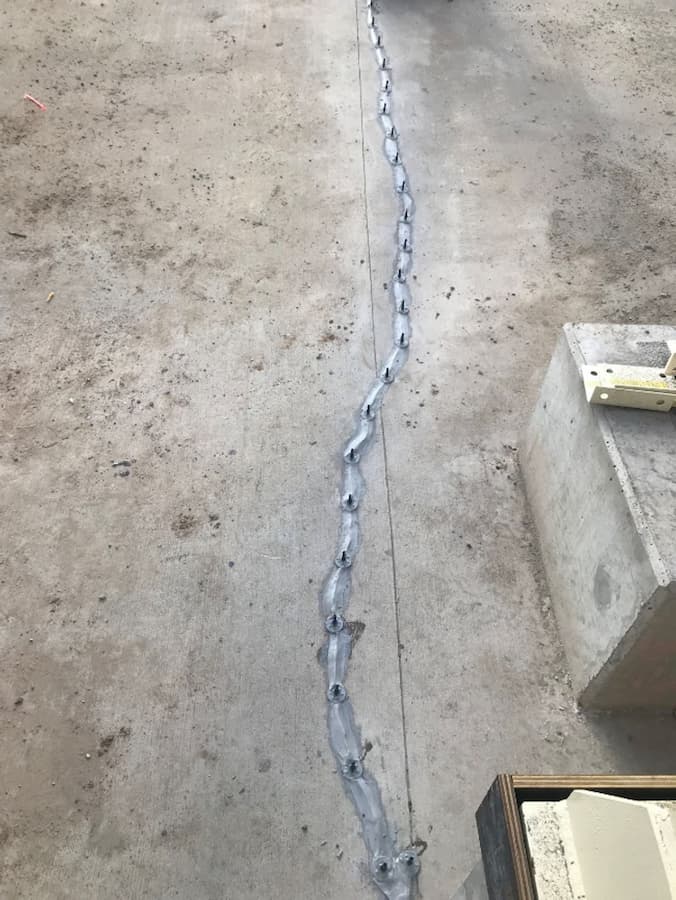
Early treatment will prevent this process from taking place and enable the injection of epoxy resins or polymers into the cracks. Once the process of corrosion is allowed to occur then a costly repair is necessary and the steel reinforcement needs to be treated or replaced to prevent failure of the structure due to a recurrence of the corrosion process or the need for further expensive repairs.
THE CRACK INJECTION PROCESS
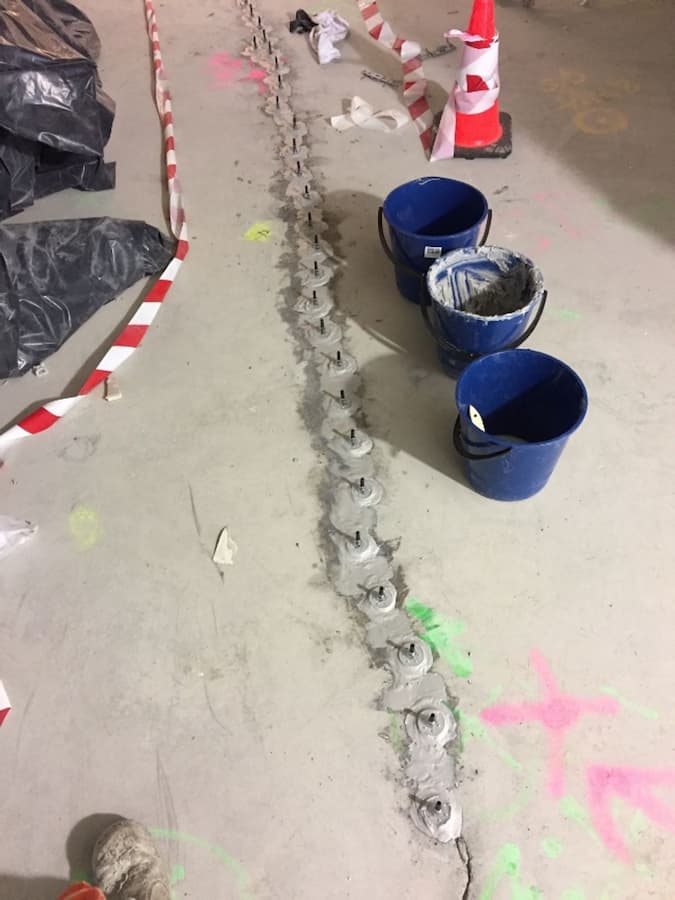
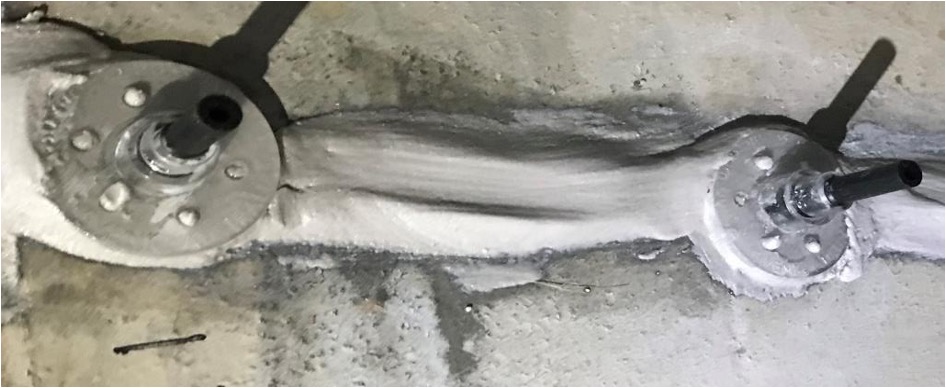
The surface of the concrete is first cleaned along the crack. Loose material and contaminants are removed. The crack is the cleaned out to remove any material so that the resin or polymer can flow freely into and along the crack.
Resin is then injected under pressure either into injection ports which have been place at intervals along the crack. Crack injection is a skilled task and should only be undertaken by experienced tradesmen.
Crack injection may be undertaken using a pump to apply pressure or using a hand pressure gun.
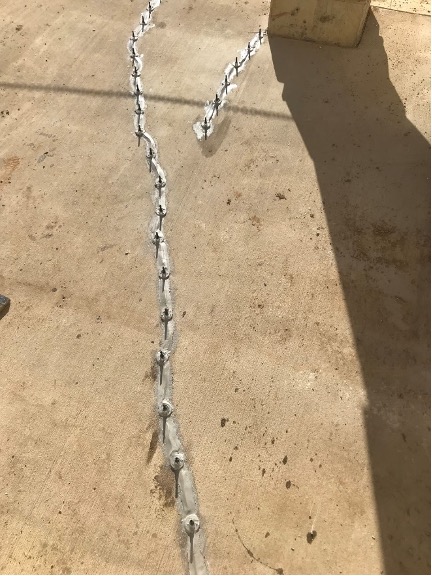
FCS Concrete Repairs are specialists in Crack Injection and Concrete Repair. There are a variety of repair processes and materials available and FCS Concrete Repairs are experienced in selecting the appropriate process and the specialist material required to carryout an effective repair.
The post Concrete Crack Injection appeared first on FCS Concrete Repairs.
]]>The post A Truism: Modern Concrete Cracks and Concrete Leaks! appeared first on FCS Concrete Repairs.
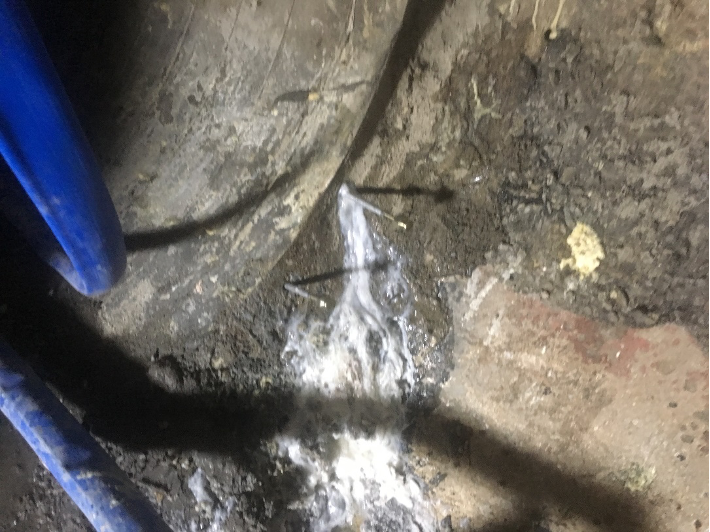
]]>Concrete that can crack!
Concrete that has cracked!
Concrete that can leak!
Concrete that has leaked!
Truism: This observation is obviously true and says nothing new or even interesting about concrete but if you have a problem and need a solution then:
TALK TO THE DIRECTORS AT FCS CONCRETE REPAIRS.
When does concrete crack and leak?
Shrinkage cracks may occur when water evaporates from the concrete soon after it is layed during the drying process. (that is, the curing process) Hot weather can cause rapid evaporation if curing compound is not properly used to slow the evaporation and cold weather can slow the evaporation process. Fine cracks give the opportunity for water to penetrate the concrete and cause the steel reinforcement to rust and concrete degradation.
Structural cracks when the concrete structure is over-loaded or subject to design flaws will allow water to penetrate the concrete and cause the steel reinforcement to rust leading to concrete degradation.
Concrete cancer cracking when water penetrates into the concrete and causes the internal steel reinforcement to corrode, expand and cracks form from within allowing water to leak through the concrete element.
Concrete cracking when the sub-base is inadequate or a washout occurs allowing water to flow under and through the concrete element.
Soil movement below the sub-base due to natural movement or the expansion and contraction of the underlying clay earth in times of heavy rain or drought allowing water to flow below and washout the concrete element.
Cracking due to freezing conditions followed by thawing which may also cause expansion and contraction and allow water to leak through and below the concrete element.
Hot summers can cause cracking due to expansion of the concrete and allow the ingress of water.
Washouts behind retaining walls may also result in structural cracking and gushing leaks.
HEADLINE NEWS!
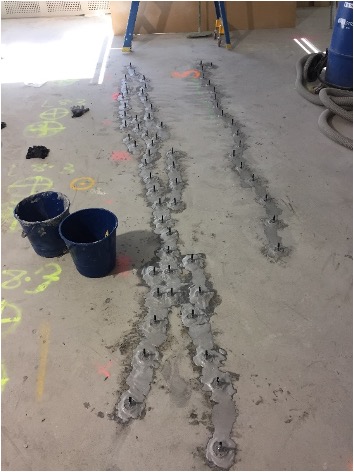
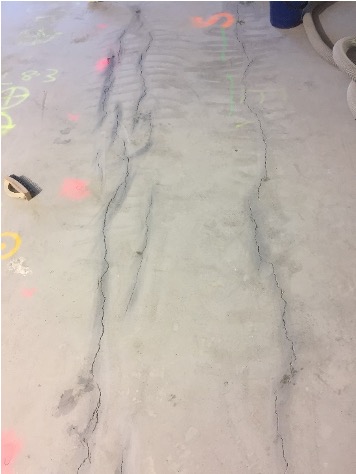
Fortunately, experienced Concrete Repair Contractors like, FCS Concrete Repairs, have the solutions. Experienced tradesmen, high-tech equipment and repair materials, and technical knowledge can combine to provide near permanent solutions to concrete cracking and leaking. Early intervention is also critical in enabling effective repair and cost effective solutions.
What can be done?
Badly damaged concrete can be replaced BUT this can be costly and involves:
- Investigation
- Demolition
- Removal
- Replacement
Modern crack injection methods can provide a cost effective alternative solution:
- Polyurethane injection
Single component hydrophobic foam can be injected to stop water infiltration and to stop high pressure flowing water and to fill voids behind the structure or joints or cracking in concrete.
Two component hydrophobic rapid setting foam can be injected. This foam is highly reactive, high strength and expands up to ten times when in contact with ground water.
- Polyurea Silicate
Two component low density foam to fill cavities provides structural strength and flexibility to stabilise strata.
- Acrylic
One component water based acrylic joint sealant and gap filler which has low adhesive and compressive strength, but high tear strength.
- Cementitious Grout
A combination of cement and water, plus admixes or additives to alter their properties. There are three main types – pure cement mixes (PCMs) composed of cement and water, admixed cement mixes (ACMs) composed of PCM and admixtures, and additive cement mixes (ADCMs) composed of ACM and additives.
- Epoxy injection
Two component, low viscosity, solvent free, moisture insensitive, structural epoxy injection resin used to seal cracks and cavities and forms an effective barrier against the infiltration of water and bonds concrete to restore structural integrity. Doesn’t bond as well to wet surfaces.
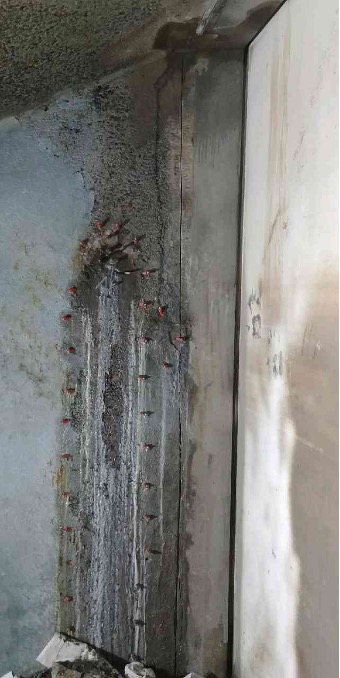
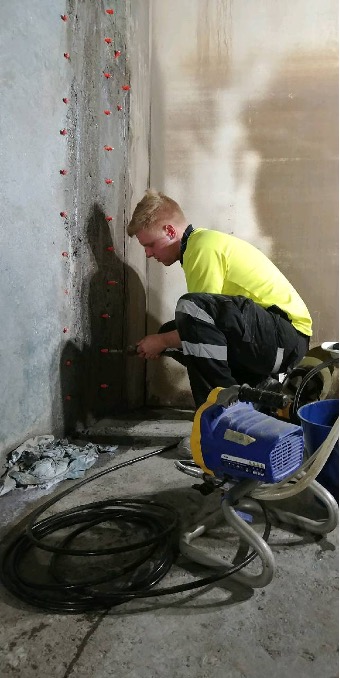
FCS Concrete Repairs has the expertise to investigate, test, diagnose and recommend on the most appropriate and cost effective solution to your concrete cracking and leaking problem.
The post A Truism: Modern Concrete Cracks and Concrete Leaks! appeared first on FCS Concrete Repairs.
]]>The post How to seal leaks in concrete structures appeared first on FCS Concrete Repairs.
]]>Recommended Uses include injecting hairline cracks, expansion joints, wide cracks, pipe joints, or pipe penetrations, or sealing active leaks in above-grade or below-grade concrete structures.
This can be used for water treatment tanks, dams, below-grade concrete walls, tunnels, manholes and elevator service pits.
Prime Flex 900XLV is compliant for contact with potable water, can expand and contract parallel to the crack in varying temperatures, can expand up to 600% unconfined and has a low viscosity to allow it to penetrate tight hairline cracks deep into the structure.
When the material contacts water, it reacts to form a white, flexible gel-like foam that acts as a barrier, sealing the cracks that allowed water to leak. As the foam reacts, it expands to fill the space and bond to the concrete to hold it in place, creating a closed cell mass that does not allow water to pass through or around it. The foam’s flexibility allows it to expand and contract along with the structure it has sealed, so it remains water tight despite temperature fluctuations.
FCS Concrete Repairs are experts in leak repair and are available to help with your concrete repair requirements. FCS Concrete Repairs are approved applicators for this product in Australia.
PRIME RESINS VIDEOS
The post How to seal leaks in concrete structures appeared first on FCS Concrete Repairs.
]]>The post Case Study: Sealing a manhole with chemical grout appeared first on FCS Concrete Repairs.
]]>Identifying the source: To pinpoint the sources of the problem, the contractor’s crew flooded the existing sinkholes and monitored the dry manhole to see where the infiltration entered.
Solution: With on-site technical support from Prime Resins, the contractor injected Prime Flex 920 through the manhole wall to fill the voids and create a watertight curtain around the manhole. Prime Flex 920 is an expansive, hydrophobic polyurethane resin that reacts to form a rock-hard watertight mass. The grouting was done from inside the manhole because the repair locations were so deep, as much as 20 feet from the surface. Probe grouting from the surface outside the manhole can be done if the manhole is too narrow to work within.
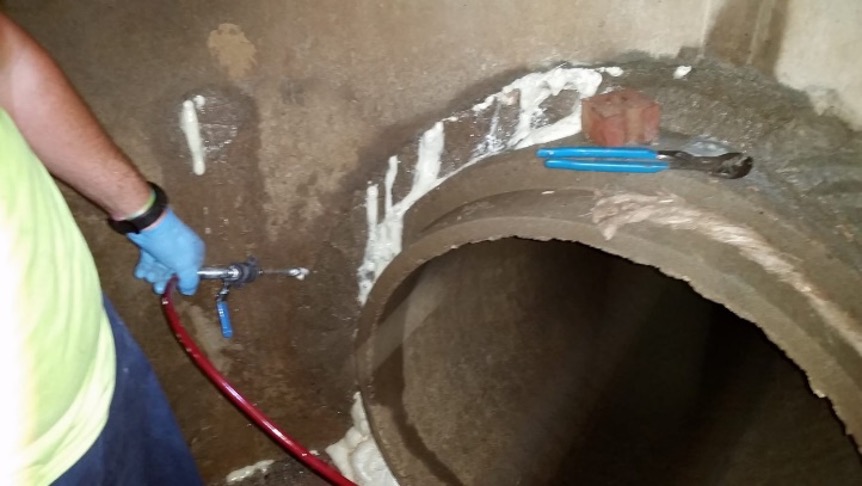
They installed four injection ports per pipe and injected each leak location starting at the lowest point and working up. This revealed a leaking injection hole from the previous repair attempt. Some 920 seeped out this hole and sealed it as well. The technicians repaired wide gaps around the main connection plus spalls and chips inside the collar using the activated oakum technique. They soaked oil-free oakum with Prime Flex 900 XLV and pushed it into the gaps where the reacted resin sealed the openings. The 900 XLV is a very low viscosity polyurethane and is hydrophilic, so it creates a tenacious bond with the wet concrete.
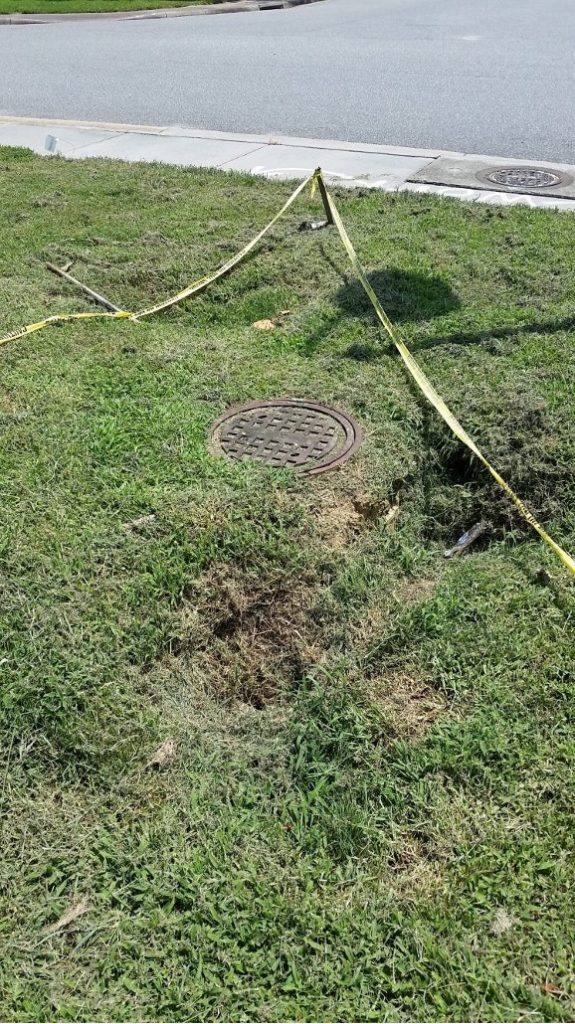
Outcome: The crew tested their repair by flooding the sinkhole again. No water drained into the manhole: their repairs stopped the infiltration. Finally, they removed the ports and plugged the holes with hydraulic cement.
Read the complete case study here.
FCS Concrete Repairs are experts in leak repair and are available to help with your concrete repair requirements. FCS Concrete Repairs are approved applicators for Prime Resins in Australia.
The post Case Study: Sealing a manhole with chemical grout appeared first on FCS Concrete Repairs.
]]>The post Joints are not the problem; Cracks are! appeared first on FCS Concrete Repairs.
]]>The first concrete pavement slabs had no real design and no crack control joints or dowels and no steel reinforcement.
In the first part of the 1900s Joint Reinforced Concrete Pavement appeared containing steel reinforcement mesh to hold cracking tightly. Then followed Jointed Plain Concrete Pavement using contraction joints to control cracking with no reinforcement steel and dowel bars were introduced to transverse joints to assist in load transfer in 1917. In 1923 Continuous Reinforced Concrete Pavement was introduced whereby transverse cracks are allowed to form but are held tightly together with continuous reinforcing steel.
Joint Spacing
Joint spacing is very important in crack control as cracks can form naturally during the curing process without suitable control joints in place.
The formula for maximum joint spacing is the relationship between:
- The radius of relative stiffness (mm),
- the modulus of elasticity of concrete (Mpa)
- the slab thickness (mm),
- the modulus of subgrade reaction (Mpa/m),
- Poisson’s ratio for concrete, usually 0.15.
Saw Cutting
There is a short window of opportunity for saw-cutting joints in slabs. Too early and you get ravelling of the joint and the faces are torn and damaged. Too late and the internal stresses causing cracking have already started randomly in the slab.
The saw cut depth and timing is critical for joint formation.
Types of Joints
There are several types of joints which can be transverse or longitudinal in direction:
- Contraction Joints
- Construction Joints
- Isolation Joints
- Expansion Joints
All are designed to induce or control cracking.
Joint Sealants
Joint Sealants are used to minimise infiltration of surface water and incompressible material into the joint. Unsealed joints can allow sub-soil washout and voids to form and uneven subsidence of slabs resulting in differing RLs and rough transitions across joints.
Dowel Bars
Dowel Bars are used to control the joints and their alignment and spacing is critical. If dowels are misaligned and both ends of the dowels are locked in the slab concrete failure and cracking will result. The absence of dowels may cause the transitions across joints to become uneven when the adjoining slab moves out of level or concrete curling occurs.
Dowel racks are an excellent innovation as they ensure that the dowels are aligned correctly and held in place during the concrete pour.
Sub-base
The sub-base material must be compactible and pumping of water through the sub-base through un-doweled joints needs to be eliminated.
Curing
Proper curing practices delay the development of these internal stresses, controls internal temperature, delays moisture evaporation, and fosters the development of increased strength.
Curing therefore controls the evaporation of moisture during the concrete setting process and helps to prevent premature drying of the surface which can prevent or delay the evaporation of the remaining moisture below resulting in an uneven set and issues with strength and surface dusting.
Steel Reinforcement
The correct placement of steel reinforcement bars and mesh is critical to provide strength, reduce width and frequency of cracking and hold slabs together whilst setting and under load.
Typical Jointing Problems
- Concrete sawing too early causing ravelling or spalling
- Concrete sawing too late causing early-age cracking
- Concrete cracking due to insufficient joint depth
- Concrete cracking due to excessive joint spacing
- Concrete cracking due to excessive unrestrained warping
- Concrete cracking due to too much edge restraint
- Concrete cracking due to excessive slab to sub-base bonding
- Concrete cracking due to misalignment of dowel bars
- Concrete cracking due to lack of consideration of weather conditions
- Sealant not adhering to joint faces
- Sealant pulls out during operation
- Sealant gelling
- Sealant cracking or debonding
- Voids of bubbles in sealant
- Water pumping into sub-base
- Sub-base washout
- Concrete slab moving out of level
The Solution
FCS Concrete Repairs are fully resourced to Inspect, Test, Diagnose and make informed recommendations on the best permanent and cost effective methods to rectify any concrete cracking and maintenance issues. Joint repair and reinstatement is our forte!
Ref: All About Concrete Pavement Joint Design & Construction
September 19, 2013, Eric Ferrebee, EITTechnical Services Engineer, ACPA
The post Joints are not the problem; Cracks are! appeared first on FCS Concrete Repairs.
]]>The post Hastings Pde North Bondi appeared first on FCS Concrete Repairs.
]]>Project: Hastings Pde North Bondi
Location: North Bondi NSW
Scope: Grind and apply SikaDur and Combiflex
The post Hastings Pde North Bondi appeared first on FCS Concrete Repairs.
]]>The post Ausgrid Zone Substation appeared first on FCS Concrete Repairs.
]]>Project: Ausgrid Zone Substation
Location: Bass Hill NSW
Scope: Concrete topping and repairs
The post Ausgrid Zone Substation appeared first on FCS Concrete Repairs.
]]>The post Building, Glenn St appeared first on FCS Concrete Repairs.
]]>Project: Building, Glenn St
Location: Milsons Point NSW
Scope: Carbon Fibre Floor Strengthening
The post Building, Glenn St appeared first on FCS Concrete Repairs.
]]>