The post Leura Western Culvert appeared first on FCS Concrete Repairs.
]]>Client: Blue Mountains City Council
Location: Blue Mountains
Project: Leura Western Culvert
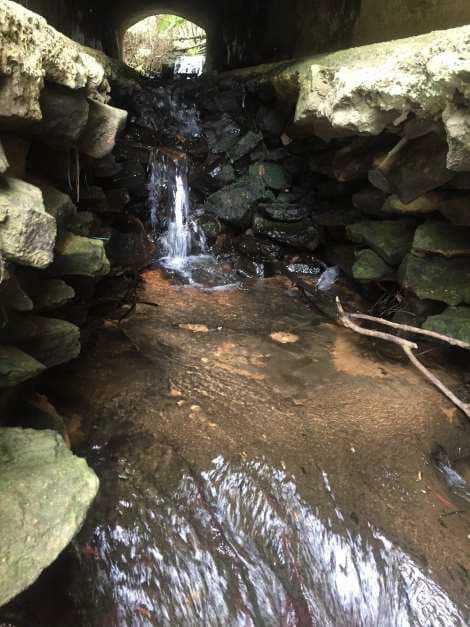
FCS Concrete Repairs has repaired this ageing culvert for our client, the Blue Mountains City Council, and helped to prolong its life.
Safety and Environmental Issues
Environmental Safety Precautions to protect this pristine environment were our first priority.
Employee Safety was also very important especially with visitors like this in the area.
Figure 1 Just Visiting: Brown Snake
Royal Flying Doctor Service – Snake Bite Safety Quiz
https://engage-nswact.flyingdoctor.org.au › content › snakebitesafetyquiz
This information could save your life.
Nature of Work:
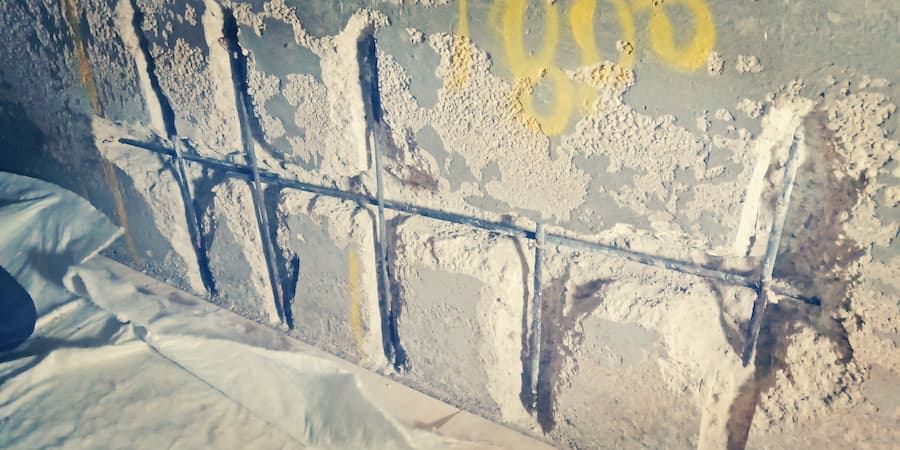
Concrete spalling repairs to internal surface of western culvert by breaking out exposed reinforcement and repair using ready to use mortars.
Repair Methodology:
- Prepare and submit an Environmental Management Plan (EMP) for the works.
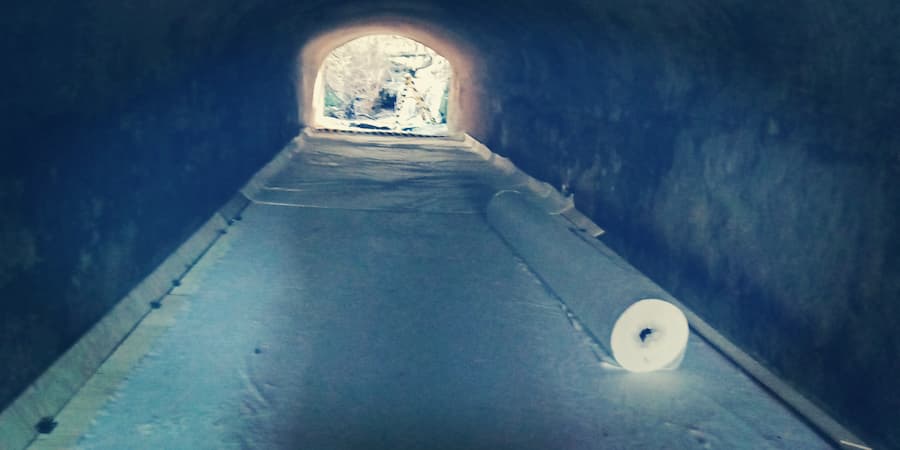
- Install encapsulating bund platform.
- Breakout concrete to expose corroded reinforcement into sound concrete.
- Do not use abrasive blasting method.
- Minimum gap and cover 20-25mm.
- Breakout until non-corroded steel is reached plus 50mm.
- Clean exposed reinforcement to remove all corroded steel and foreign matter.
- Wash with low pressure water jet.
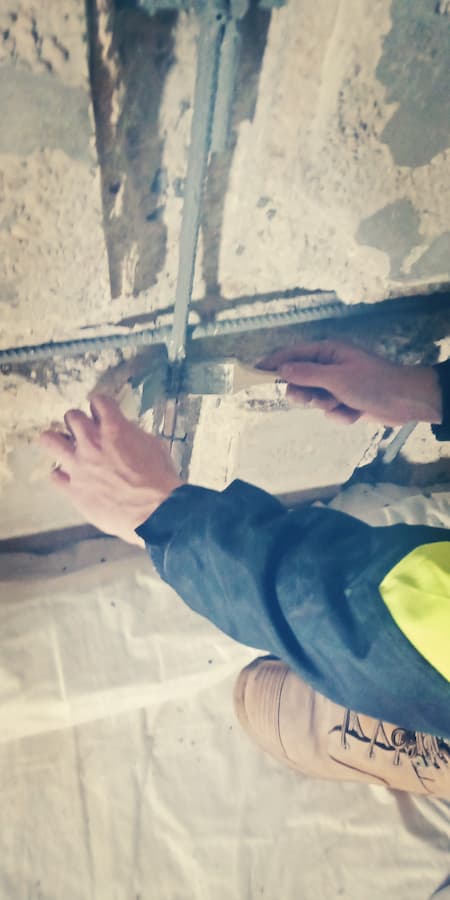
- Coat exposed steel with Sika® EpoCem®.
- Apply bond coat, Sika MonoTop 910 emulsion.
- Use Sika MonoTop repair mortar.
- Seal the entire internal surface of the culvert with corrosion inhibitor, plus hydrophobic impregnating coats:
- Apply Migrating Corrosion Inhibitor Application Sika® FerroGard®-903 Plus.
- Apply Sikagard®-706 Thixo is a Silane based water repellent impregnation cream.
- Wet Vac
- Pressure Clean on completion.
Products Recommended for this Project by FCS Concrete Repairs:
Sika® SikaTop 110 EpoCem®.
SikaTop® Armatec®-110 EpoCem® is a cementitious epoxy resin compensated 3-component coating material with corrosion inhibitor, used as bonding primer and reinforcement corrosion protection.
USE
- Suitable for control of anodic areas (Principle 11, method 11.1 EN 1504-9)
- Suitable in concrete repair as corrosion protection for reinforcement.
- Suitable as a bonding primer on concrete and mortar
- Suitable for Increasing cover in Low Cover Concrete rectification.
CHARACTERISTICS AND ADVANTAGES
- Contains EpoCem® technology – improved bonding agent
- Extended open times for repair mortars
- Compatible with most Sika MonoTop® repair mortars
- Excellent adhesion to concrete and steel
- Contains corrosion inhibitor
- Certified for application under dynamic load conditions
- Good resistance to water and chloride penetration
- High shear strength
- Long pot life
- Easy to mix
- Can be brushed on or applied using spray gun
- 2mm cured material equivalent to approx. 50mm of Concrete
Sika MonoTop 910 N
Sika® MonoTop®-910 N is a cementitious, polymer modified one-component coating material containing silica fume. (Replaces Monotop 610)
USE
Sika® MonoTop®-910 N is used as bonding primer and reinforcement corrosion protection for reinforcement and is suitable:
– For the control of anodic areas (Principle 11, method 11.1 of EN 1504-9)
– As a bonding primer on concrete and mortar
– In concrete repair as reinforcement corrosion protection
CHARACTERISTICS AND ADVANTAGES
– Easy to mix, just add water
– User-friendly application
– Excellent adhesion to concrete and steel
– Good resistance to water and chloride penetration
– Good mechanical strengths
– Can be brushed on or applied using spray gun
Sika MonoTop 352 NFG Repair Mortar
R3 light-weight, structural repair mortar. High build repair mortar, 4 – 75mm in one application. Excellent workability and finish and suitable for overhead and vertical applications. Low shrinkage
USE
- Suitable for restoration work (Principle 3, method 3.1 & 3.3 of EN 1504-9). Repair of spalling and damaged concrete in buildings, bridges, infrastructure and superstructure works.
- Suitable for repair works to concrete with a compressive strength of 25-45 MPa.
- Suitable for structural strengthening (principle 4, method 4.4 of EN 1504-9). Increasing the bearing capacity of the concrete structure by adding mortar.
- Suitable for preserving or restoring passivity (principle 7, method 7.1 and 7.2 of EN 1504-9). Increasing cover with additional mortar and replacing contaminated or carbonated concrete.
CHARACTERISTICS AND ADVANTAGES
- Polymer modified for increased durability
- Superior workability and finishing
- Suitable for hand and machine application
- Can be applied up to 75 mm thick per application layer
- Portable water approved to AS/NZS 4020:2005 – Testing of products for use in contact with drinking water
- Class R3 of EN 1504-3
- Low density but still suitable for structural repair
- Very low shrinkage behaviour
- Does not require a bonding primer even when manually applied
- Contains corrosion inhibitor Low chloride permeability
Sika® FerroGard®-903 Plus
Sika® FerroGard®-903+ is a unique blend of non-toxic, organic corrosion inhibitor based on amino alcohol and salts of amino alcohol technology, designed for use as an impregnation on hardened reinforced concrete.
Sika® FerroGard®-903+ penetrates the concrete and forms an adsorbed protective film on the surface of the steel reinforcement. The protective adsorbed film of Sika® FerroGard®-903+ reduces the rate of corrosion in carbonated and chloride contaminated concrete.
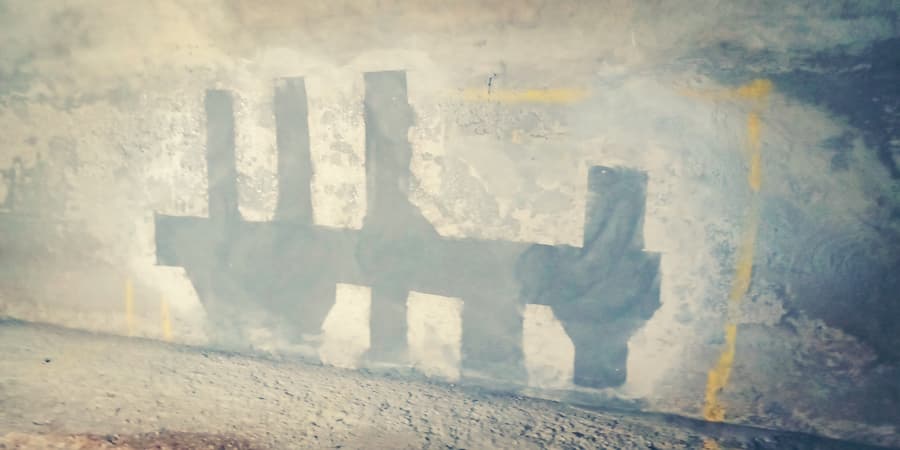
Reinforced Corrosion Controls of Culverts
Structure/Condition:
Reinforced concrete structure.
Chloride induced corrosion to internal and external deck surfaces.
Localised concrete damage.
Low concrete cover to reinforcement.
Requirements:
Reduce active corrosion rates and maintain passive corrosion levels.
Control corrosion by anodic and cathodic principles.
Provide up to 10 years additional protection before next maintenance.
Sika Solution:
Testing to prove penetration of Sika® FerroGard®-903 Plus to depth of reinforcement.
Clean concrete surfaces.
Concrete repairs using Sika® MonoTop® – 352 NFG
Application of Sika® FerroGard®- 903 Plus
Application of e.g. Sikagard® 706 Hydrophobic Impregnation.
Sikagard®-706 Thixo
Silane based water repellent impregnation cream. Ready for use
Long term efficiency, deep penetration. Low VOC content
USE
Sikagard®-706 Thixo is used as water-repellent impregnation (hydrophobic treatment) for absorbent substrates such as concrete in civil engineering or building concrete structures subjected to heavy stress due to freeze and thaw cycles and de-icing salts, chloride attack in marine environment, etc…
- Suitable for protection against ingress (Principle 1, method 1.1 of EN 1504-9)
- Suitable for moisture control (Principle 2, method 2.1 of EN 1504-9)
- Suitable for increasing the resistivity (Principle 8, method 8.1 of EN 1504-9)
CHARACTERISTICS AND ADVANTAGES
- Non-sag (thixotropic) consistency, allowing wastage-free application of sufficient quantities and assuring deep penetration
- Reduction of water absorption
- Reduction of absorption of aggressive or deleterious agents dissolved in water (i.e. de-icing salts or chloride from marine environment)
- No noticeable change of water vapour permeability
- Not film forming
- Ready for use
- Long term efficiency, deep penetration
- Increases the resistance of concrete to freeze and thaw cycles and de-icing salts
- Resistant to sea water
- Low VOC content
The post Leura Western Culvert appeared first on FCS Concrete Repairs.
]]>The post Peach Tree Road Bridge, Megalong Valley NSW appeared first on FCS Concrete Repairs.
]]>Client: Blue Mountains City Council
Location: Blue Mountains
Project: Peach Tree Road Bridge, Megalong Valley NSW
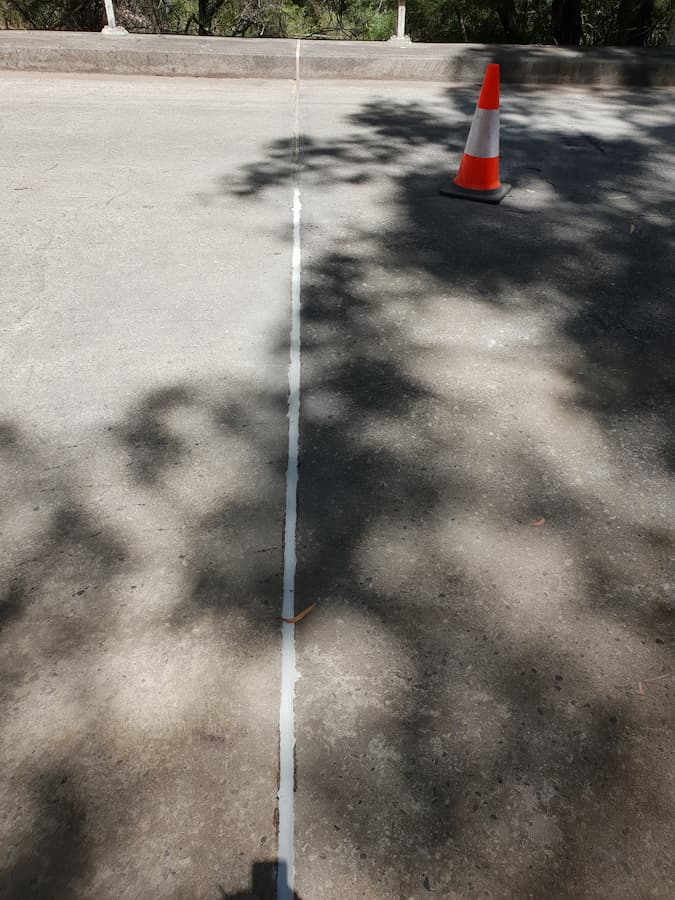
FCS Concrete Repairs has taken the bump and the thump out of the Peach Tree Road Bridge road surface for our client, the Blue Mountains City Council, and helped to prolong the life and amenity of the bridge.
Safety Precautions were our first priority.
Nature of Work:
Open Construction Joints were repaired and filled with a flexible filler.
Failing Concrete patches were also repaired and filled.
An important aspect of this relatively small but important job was to provide a smooth transition across the repairs.
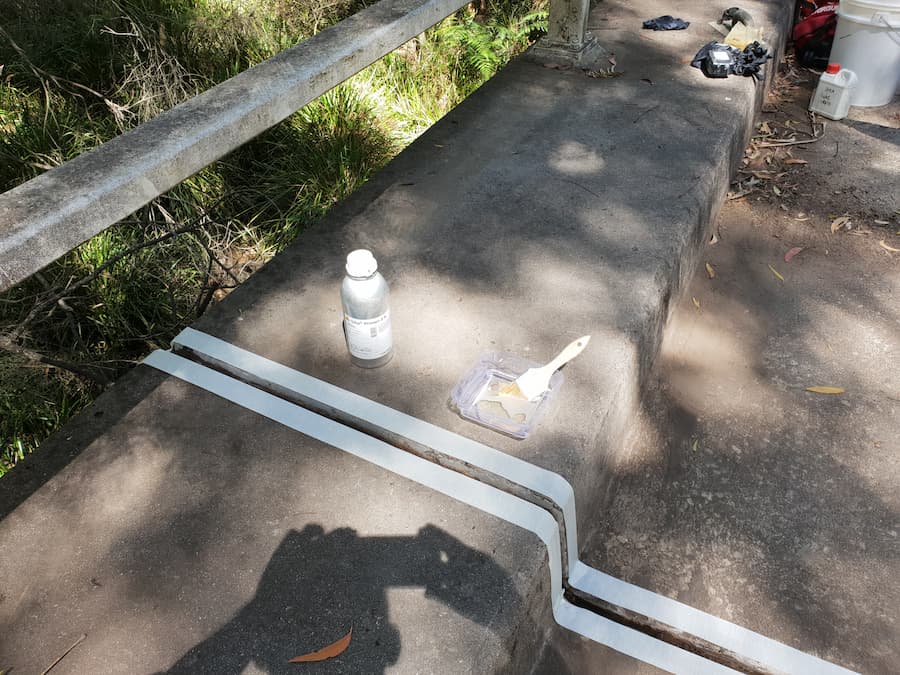
Repair Methodology:
Establish a work safe zone using a FCS procedures.
A Safe Work Method Statement and / or Task Risk Assessment, evacuation plan including the closest medical facility will be written and all personnel will be inducted into it before starting works. A toolbox talk will be held every day before starting works.
Establish the concrete elements types that require repairing and scope up an agreed repair and remediation work method, procedures and draft agreed ITP’s Inspection and Test Plans for the works.
Repair Methodology strictly as per Australasian Concrete Repair Association (ACRA) Australian Standard Concrete Repair Methodology HB 84:2018.Guide to Concrete Repair and Protection.
Products Recommended for this Project by FCS Concrete Repairs:
Sikasil 728NS
Description:
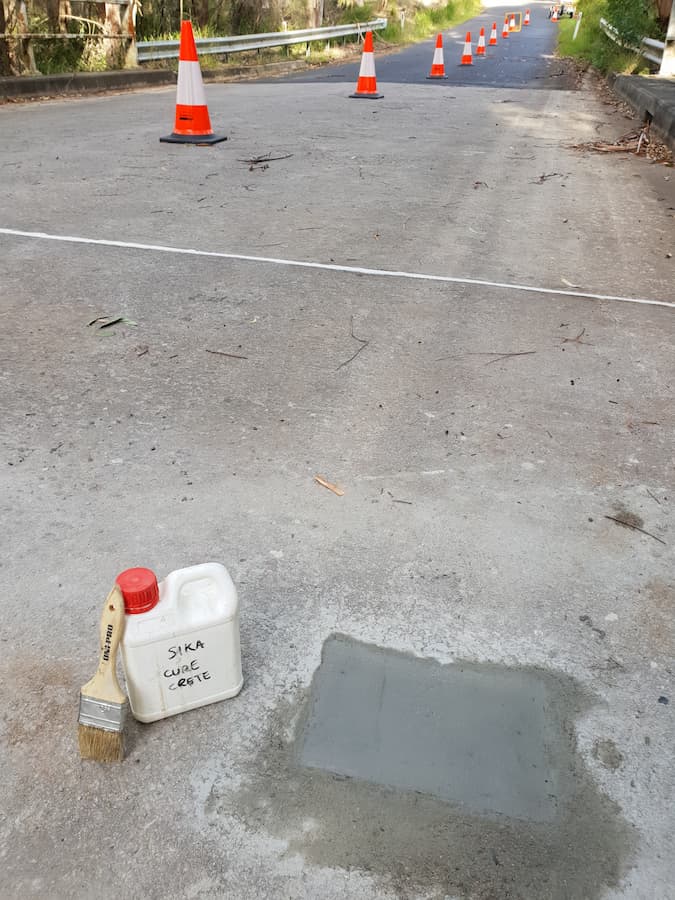
Sikasil-728 NS is a non-sag, one-component, ultra-low modulus elastomeric, neutral cure silicone sealant for sealing of joints in pavements according to ASTM D-5893.
Characteristics / Advantages
- Ready to use
- Very high movement capability (ASTM C-719) +100%, -50%
- Excellent flexibility for use in extremely high and low temperature climates
- Very good adhesion, especially to concrete
- Extremely long service life due the outstanding UV resistance
Environmental Information
Specific Characteristics:
VOC Content 1,64% by wt
Specific Ratings:
LEED® EQc 4.1 – passes
SCAQMD, Rule 1168 – passes
BAAQMD, Reg. 8, Rule 51 – passes
Sika Primer 3N
Description:
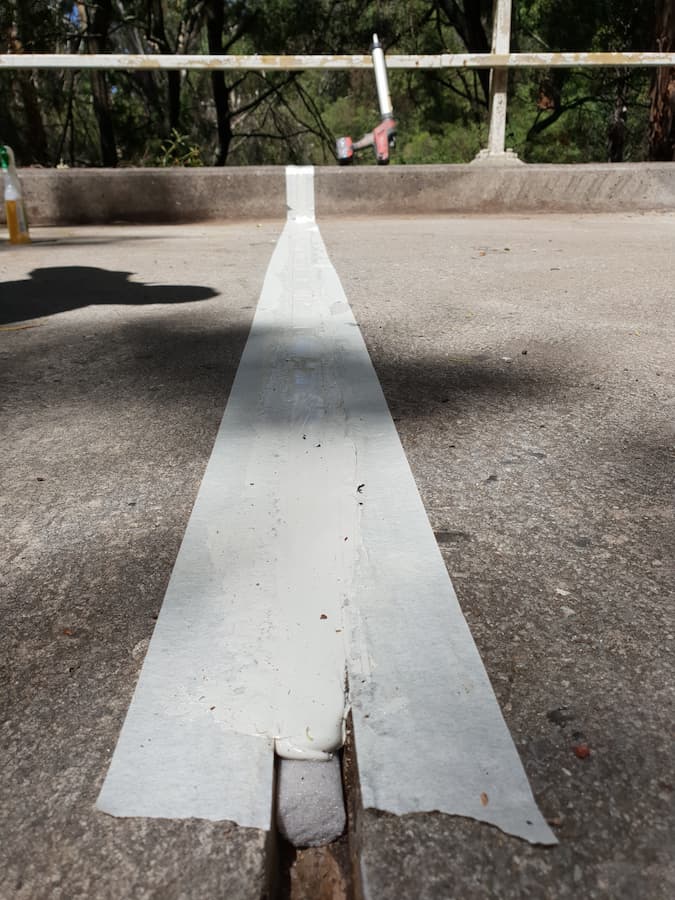
Sika® Primer-3 N is a solvent-based, one-part primer for Sikasil® products used on porous substrates (e.g. concrete) and metals.
Characteristics / Advantages
■ Easy to apply ■ Water-repellent ■ Isocyanate-free ■ Short flash-off time
Sika Lightlon Rod Closed Cell Foam Backing Rod
Sika Backing Rod is manufactured from extruded, closed cell polyethylene foam, available in rods with different diameters and lengths.
Use: Sika Backing Rod is used as a back up material for cold applied Sika sealants to give the sealant the correct thickness. It also acts as a bondbreaker, permitting the most efficient joint design.
Characteristics / Advantages
- Provide firm backing for joints subject to hydrostatic pressure
- Easy to apply
- Closed cell
- No bond to most sealants
- Compatible with cold applied sealants (polyurethane, silicones)
- Different rod diameters
- Good water resistance
- Odourless
The post Peach Tree Road Bridge, Megalong Valley NSW appeared first on FCS Concrete Repairs.
]]>The post A Truism: Modern Concrete Cracks and Concrete Leaks! appeared first on FCS Concrete Repairs.
]]>Concrete that can crack!
Concrete that has cracked!
Concrete that can leak!
Concrete that has leaked!
Truism: This observation is obviously true and says nothing new or even interesting about concrete but if you have a problem and need a solution then:
TALK TO THE DIRECTORS AT FCS CONCRETE REPAIRS.
When does concrete crack and leak?
Shrinkage cracks may occur when water evaporates from the concrete soon after it is layed during the drying process. (that is, the curing process) Hot weather can cause rapid evaporation if curing compound is not properly used to slow the evaporation and cold weather can slow the evaporation process. Fine cracks give the opportunity for water to penetrate the concrete and cause the steel reinforcement to rust and concrete degradation.
Structural cracks when the concrete structure is over-loaded or subject to design flaws will allow water to penetrate the concrete and cause the steel reinforcement to rust leading to concrete degradation.
Concrete cancer cracking when water penetrates into the concrete and causes the internal steel reinforcement to corrode, expand and cracks form from within allowing water to leak through the concrete element.
Concrete cracking when the sub-base is inadequate or a washout occurs allowing water to flow under and through the concrete element.
Soil movement below the sub-base due to natural movement or the expansion and contraction of the underlying clay earth in times of heavy rain or drought allowing water to flow below and washout the concrete element.
Cracking due to freezing conditions followed by thawing which may also cause expansion and contraction and allow water to leak through and below the concrete element.
Hot summers can cause cracking due to expansion of the concrete and allow the ingress of water.
Washouts behind retaining walls may also result in structural cracking and gushing leaks.
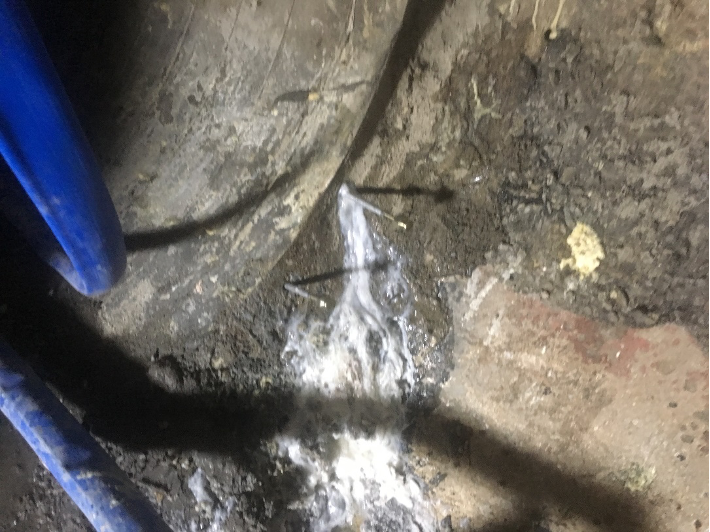
HEADLINE NEWS!
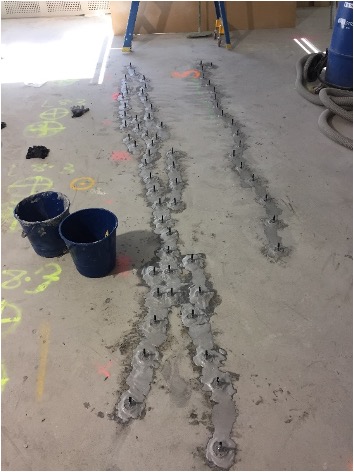
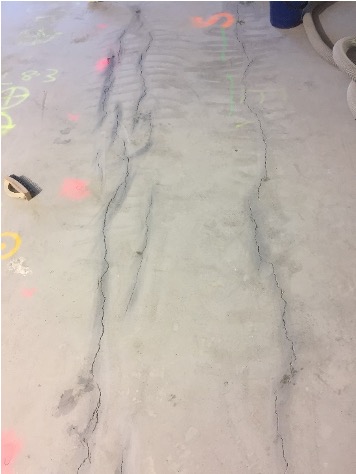
Fortunately, experienced Concrete Repair Contractors like, FCS Concrete Repairs, have the solutions. Experienced tradesmen, high-tech equipment and repair materials, and technical knowledge can combine to provide near permanent solutions to concrete cracking and leaking. Early intervention is also critical in enabling effective repair and cost effective solutions.
What can be done?
Badly damaged concrete can be replaced BUT this can be costly and involves:
- Investigation
- Demolition
- Removal
- Replacement
Modern crack injection methods can provide a cost effective alternative solution:
- Polyurethane injection
Single component hydrophobic foam can be injected to stop water infiltration and to stop high pressure flowing water and to fill voids behind the structure or joints or cracking in concrete.
Two component hydrophobic rapid setting foam can be injected. This foam is highly reactive, high strength and expands up to ten times when in contact with ground water.
- Polyurea Silicate
Two component low density foam to fill cavities provides structural strength and flexibility to stabilise strata.
- Acrylic
One component water based acrylic joint sealant and gap filler which has low adhesive and compressive strength, but high tear strength.
- Cementitious Grout
A combination of cement and water, plus admixes or additives to alter their properties. There are three main types – pure cement mixes (PCMs) composed of cement and water, admixed cement mixes (ACMs) composed of PCM and admixtures, and additive cement mixes (ADCMs) composed of ACM and additives.
- Epoxy injection
Two component, low viscosity, solvent free, moisture insensitive, structural epoxy injection resin used to seal cracks and cavities and forms an effective barrier against the infiltration of water and bonds concrete to restore structural integrity. Doesn’t bond as well to wet surfaces.
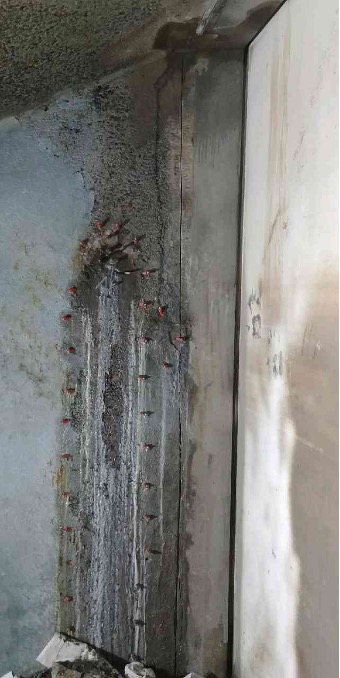
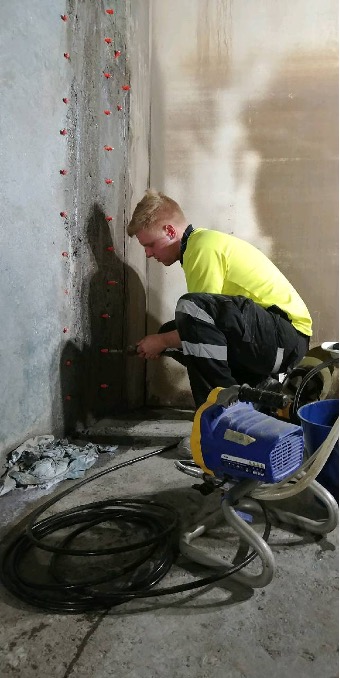
FCS Concrete Repairs has the expertise to investigate, test, diagnose and recommend on the most appropriate and cost effective solution to your concrete cracking and leaking problem.
The post A Truism: Modern Concrete Cracks and Concrete Leaks! appeared first on FCS Concrete Repairs.
]]>The post Case Study: Sealing a manhole with chemical grout appeared first on FCS Concrete Repairs.
]]>Identifying the source: To pinpoint the sources of the problem, the contractor’s crew flooded the existing sinkholes and monitored the dry manhole to see where the infiltration entered.
Solution: With on-site technical support from Prime Resins, the contractor injected Prime Flex 920 through the manhole wall to fill the voids and create a watertight curtain around the manhole. Prime Flex 920 is an expansive, hydrophobic polyurethane resin that reacts to form a rock-hard watertight mass. The grouting was done from inside the manhole because the repair locations were so deep, as much as 20 feet from the surface. Probe grouting from the surface outside the manhole can be done if the manhole is too narrow to work within.
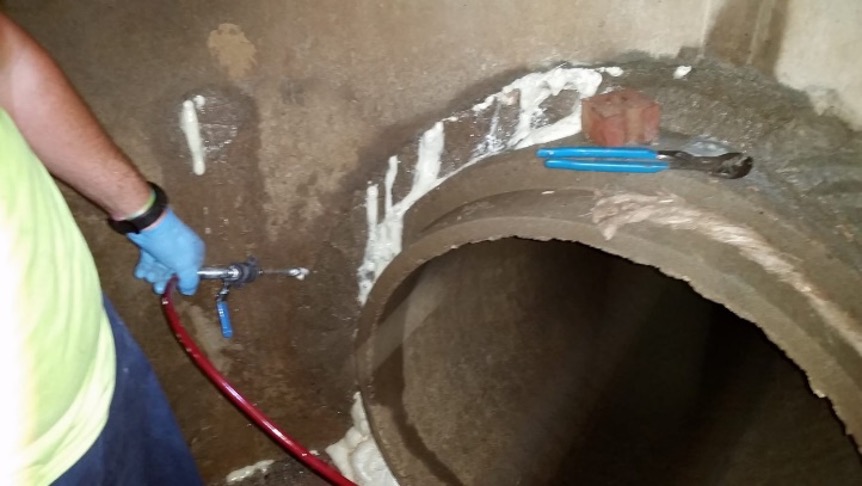
They installed four injection ports per pipe and injected each leak location starting at the lowest point and working up. This revealed a leaking injection hole from the previous repair attempt. Some 920 seeped out this hole and sealed it as well. The technicians repaired wide gaps around the main connection plus spalls and chips inside the collar using the activated oakum technique. They soaked oil-free oakum with Prime Flex 900 XLV and pushed it into the gaps where the reacted resin sealed the openings. The 900 XLV is a very low viscosity polyurethane and is hydrophilic, so it creates a tenacious bond with the wet concrete.
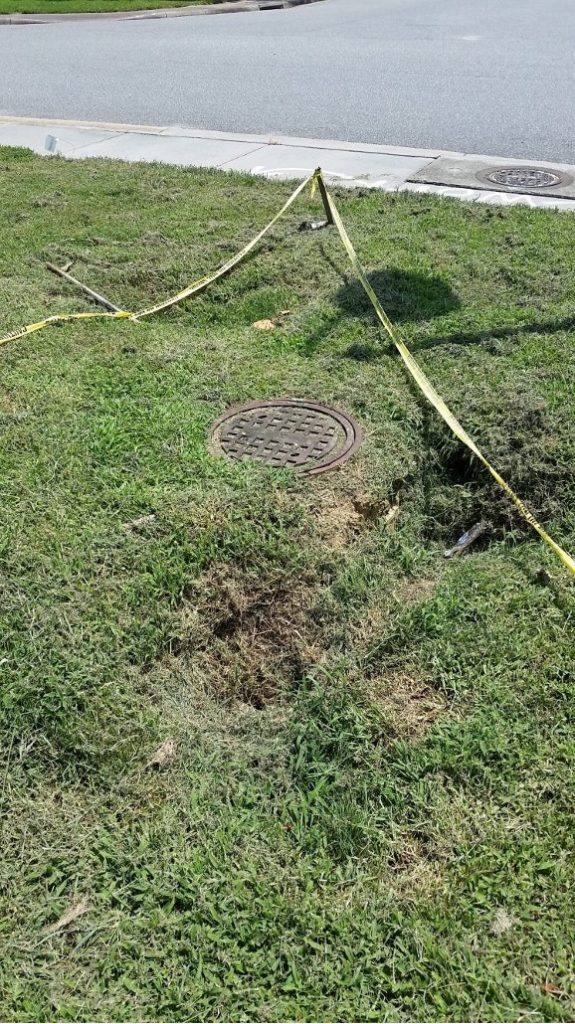
Outcome: The crew tested their repair by flooding the sinkhole again. No water drained into the manhole: their repairs stopped the infiltration. Finally, they removed the ports and plugged the holes with hydraulic cement.
Read the complete case study here.
FCS Concrete Repairs are experts in leak repair and are available to help with your concrete repair requirements. FCS Concrete Repairs are approved applicators for Prime Resins in Australia.
The post Case Study: Sealing a manhole with chemical grout appeared first on FCS Concrete Repairs.
]]>The post Maintenance of Concrete Expansion Joints appeared first on FCS Concrete Repairs.
]]>Expansion Joints in carparks and hardstand areas can also be repaired through permeation grouting of the sub-base to fill voids and polyurethane injection to lift the slab back to level where there is a step in the joint due to subsidence or washout. This process can avoid extremely costly and disruptive demolition and replacement of the concrete slab.
FCS Concrete Repairs are experts in the field of concrete repair and are approved contractors for the major suppliers of joint sealants and joint repair products.
You can rely on FCS Concrete Repairs, as we are Quality Accredited under the International Standard ISO 9001: 2015 to carryout quality workmanship with full backup services, if required.
Expansion Joint Re-sealing
Expansion Joints in concrete floors and walls control movement and over time the joint sealant can deteriorate. The sealant can be removed and replaced to ensure that the joint is waterproof and performs as required.
Expansion Joint Reinstatement
Expansion joints require that the facing edges of the adjoining concrete slabs are sound so that the flexible joint sealant forms a strong bond between the concrete slab or wall elements. Industrial floors, which may be on ground or suspended, require regular maintenance as they are vulnerable to impact damage from mobile plant including forklifts which are often hard-wheeled. Broken and crumbling edges along an expansion joints is an indication of future extensive and costly damage.
Where considerable damage has occurred it may be necessary to carry out more extensive repair including concrete saw cutting and edge reinstatement. Regular inspection is a cost saving option to ensure that the jointing material is still performing and protecting the concrete joint edge faces. Heavy duty repair mortars may be required to re-construct the joint and these can be fast drying/curing to minimise downtime. FCS Concrete Repairs can provide professional advice in this regard.
Widening Expansion Joints
Expansion Joints may widen over time due to slab movement and damage.
Narrow expansion joints can provide a smoother transition across the joint and minimise future damage. FCS Concrete Repairs can re-form wide expansion joints cost effectively to reduce the gap and the impact over widening joints.
The post Maintenance of Concrete Expansion Joints appeared first on FCS Concrete Repairs.
]]>The post Expansion Joint Remediation – Wyong NSW appeared first on FCS Concrete Repairs.
]]>Sikaflex® Tank N is a 1-part Elastic Sealant for Joints Exposed to Chemicals.
Sikaflex® Tank N is used in areas for the storage, filling and handling of water polluting liquids such as floor joints in petrol stations, joints in handling areas, storage tanks and containment bunds, movement- and connection joints according to IVD data sheet no. 1. I. E. in workshops and parking garages
Remediation Process:
Prior to Sealing:
- Removal of existing joints
- Clean out existing expansion joints to depth of min 50mm using road saw with flat wire wheel
- Clean out joints. Vacuum and sweep joints
- Repair cracked concrete by pinning and stitching
Sealing to Expansion Joints:
- Tape up sides of joint repair with Masking Tape to avoid spilling over
- Install foam backing rods into the joints
- Prime seal expansion joints with Sika® Primer-3-N
- Installation of Sikaflex® Tank N into joint at a min. depth of 15mm
- Remove masking tape
- Final Inspection and hand-over.
The post Expansion Joint Remediation – Wyong NSW appeared first on FCS Concrete Repairs.
]]>The post Gosford Council Drop Manhole Rehabilitation appeared first on FCS Concrete Repairs.
]]>FCS Concrete Repairs is experienced and fully resourced to carryout rehabilitation works for Water and Sewerage Infrastructure in confined spaces.
The Scope of Works for this project includes:
- Work health and safety management plan
- Safe work method statements prepared
- Inspection test plan prepared
- Task risk assessments prepared
- Surface cleaning and removal of deteriorated concrete
- Wet blasting of exposed steel reinforcement
- Replacement of steel reinforcement, if required
- Protective coating of steel reinforcement
- Surface restoration including reinforcement splicing and coating
- Concrete remediation
- Tensile or bond strength testing
- Reinstatement of gatic covers and access ladders
The project works are carried out in confined spaces within the Drop Manholes over-night and strict safety precautions are required including the closure of the sewer mains.
The Problem: Biogenic Corrosion
When the right conditions exist in a sewer system, Acidophilic* bacteria feed on sulfur from H2S gas and release sulfuric acid that corrodes concrete, mortar, steel, and ductile iron. In the most severe cases, bacterial activity can destroy up to 25 mm of concrete per year.
The Solution: SewperCoat® Wet Spray
SewperCoat®’s outstanding durability in the most severe sewer environments relies on the unique “bacterio-static effect” of calcium aluminates. The metabolism of acid-generating bacteria is inhibited on calcium aluminate surfaces, thus maintaining a pH level above 3.
Description
SewperCoat® Wet Spray is a mortar designed to provide exceptional resistance to the biogenic corrosion environment found in sanitary sewers. The unique biogenic corrosion resistance of SewperCoat® Wet Spray is due to its 100% calcium aluminate composition, i.e. the combination of calcium aluminate cement and calcium aluminate aggregates.
SewperCoat® Wet Spray can be utilized to rehabilitate sewer infrastructures that have been damaged over years by biogenic corrosion. SewperCoat® Wet Spray can also be utilized to provide a protection lining to new infrastructures that will be exposed to biogenic corrosion conditions.
SewperCoat® Wet Spray is a cementitious mortar, fully compatible with the moist environment found in sewers.
Advantages
The unique properties of SewperCoat® Wet Spray result from the chemical and mineral phases formed during the hydration process. SewperCoat® is unique when compared to other materials such as ordinary portland cement (OPC) concrete, epoxies, poly-vinyl chloride (PVC) or polyethelene because of its ability to inhibit bacterial activity which drastically reduces the production of sulphuric acid. Key advantages of the SewperCoat® Wet Spray are as follows:
- Inhibits bacterial activity
- Neutralizes sulfuric acid
- Readily adheres to damp concrete
- Easy Monolithic installation
- Provides Long Term corrosion protection
- Contains no VOC’s
Preparation
Clean the surface and remove any dust, unsound or contaminated material, plaster, oil, paint, grease, corrosion deposits or algae. Where breaking out is not required, roughen the surface and remove any laitance by light scabbling or grit-blasting. The substrate should be thoroughly saturated with clean water prior to the spray application of the SewperCoat® Wet Spray. Under no circumstances shall the material be applied in an area where running water exists.
Application
In the wet spray process, the mortar is batched and mixed prior to being pumped along suitable hoses to the discharge nozzle. High velocity air is introduced at the nozzle to disperse the mortar and propel it into position. The impact of the mortar ensures excellent contact with the substrate and good compaction. As the material is batch mixed prior to pumping, the water content can be accurately controlled, ensuring a consistent product is applied to the substrate.
The spraying technique employed for each job will depend on the nature of the work and the materials used. Wherever possible, it is recommended that trials are performed with the material and equipment on elements which exhibit the same features as the job to ensure the spraying technique employed is appropriate. If sagging occurs during application to vertical surfaces, the SewperCoat® Wet Spray should be completely removed and reapplied at a reduced thickness on to the substrate.
Note: minimum applied thickness of SewperCoat® Wet Spray is 25mm. Equipment used must be clean and free of Portland cement build up to avoid accelerated set. Water addition to be between 2.7-3.00L per 20kg bag of SewperCoat® Wet Spray. Please refer to the SewperCoat® Wet Spray application guide for further information.
Properties
- Compressive Strength (MPa) (AS 1478.2 – 2005)
- 6 hours >20MPa
- 24 hours >40MPa
- 28 days >70MPa
- Modulus of Rupture (Flexural Strength) (MPa) (AS 1012.11 – 2000):
- 24 hours >4.5MPa
- 28 days >8.5MPa
- Indirect Tensile strength (AS 1012.10 – 2000): 28 days >3.5MPa
- Dimensional Change (Drying shrinkage) (AS 1478.2 – 2005): 56 days <600 microstrains
Watch This Product in Action Here
FCS Concrete Repairs are experts in the repair and rehabilitation of Drop Manholes, Digester Systems, Screen Tanks and other Sewage Infrastructure works. FCS Concrete Repairs are on call to provide advice or carryout Specified Rehabilitation Works safely in a professional and cooperative manner.
The post Gosford Council Drop Manhole Rehabilitation appeared first on FCS Concrete Repairs.
]]>The post MANLY STRATA UNIT STRUCTURAL STRENGTHENING appeared first on FCS Concrete Repairs.
]]>Our client’s Engineer advised FCS Concrete Repairs that the unit’s soffit required strengthening and provided a marked up drawing indicating where the specified product, Sika Carbodur S1214 strengthening strips, were required to be installed.
The process of installation was carried out by FCS Concrete Repairs experienced trained staff in accordance with the manufacturer’s specifications and the client’s engineering design.[/vc_column_text][vc_column_text]Note: FCS Concrete Repairs staff have received instruction from Sika Australia training personnel and FCS Concrete Repairs is a Sika approved applicator.
The process was as follows:
- Prior to commencement the soffit substrate quality was established using the Pull-off tests with a minimum requirement of 1.5MPa and tested to ensure that moisture content was less than 4% pbw.
[/vc_column_text][/vc_column][/vc_row][vc_row][vc_column width=”1/3″][vc_gallery interval=”3″ images=”2684″ img_size=”medium”][/vc_column][vc_column width=”1/3″][vc_gallery interval=”3″ images=”2685″ img_size=”medium”][/vc_column][vc_column width=”1/3″][vc_gallery interval=”3″ images=”2686″ img_size=”medium”][/vc_column][/vc_row][vc_row][vc_column][vc_column_text]
- The surface to be strengthened was levelled where necessary to provide maximum

 .
. - The substrata was cleaned of any contaminants and loose material.
- The substrata was tested to ensure that moisture content was less than 4% pbw.
- Ambient temperature was between the required 8°C and 35°C.
- Substrate temperature was atleast 3°C above the dew point.
- Sikadur 30 adhesive was used to fix the Sika CarboDur S1214 Carbon Fibre Reinforced Polymer strips(CFRP) to the soffit and was mixed as per the Sika product Technical Data Sheet.
- Sikadur–30 is a thixotropic adhesive mortar based on a 2-component solvent free epoxy resin which has the following properties required for the application of the product to the soffit:
[/vc_column_text][vc_column_text]Tensile Properties (ASTM D-638)
Tensile strength is a measurement of the force required to pull something such as rope, wire, or a structural beam to the point where it breaks.
7 day Tensile Strength 3,600 psi (24.8 MPa)
Flexural Properties (ASTM D-790)
Flexural strength, also known as modulus of rupture, or bend strength, or transverse rupture strength is a material property, defined as the stress in a material just before it yields in a flexure test.
14 day Flexural Strength (Modulus of Rupture) 6,800 psi (46.8 MPa)
Shear Strength (ASTM D-732)
Shear strength represents how hard you can try to cut it without it breaking.
14 dayShear Strength 3,600 psi (24.8 MPa)
- Sika CarboDur S1214 CFRP strips were installed in the designated locations on the soffit of the unit using the Sikadur 30 adhesive.
[/vc_column_text][/vc_column][/vc_row][vc_row][vc_column][vc_column_text]

 Sika CarboDur can be used to strengthen reinforced concrete due to loading increases, structural damage, changes in the structure or design or construction defects.
- Sika CarboDur S1214 is 120mm wide, 1.4mm thick and can achieve very high tensile and flexural strengths:
Elastic Modulus >165,000 MPa
Tensile Strength >2,800 MPa
Mean Value of Tensile Strength at Break > 3,050 MPa
- Sikadur 30 was first applied to the soffit to a nominal thickness of 1.5mm and then to the Sika CarboDur laminate also to a thickness of 1.5mm.
- The laminate was then placed on the surface of the soffit and rolled into the epoxy resin adhesive.
- Sikadur 30 reaches it’s design strength after 7 days.
RESULT: The end result was that the soffit of the unit was structurally strengthened to the specifications of the client’s Engineer cost effectively without the need for any costly structural concrete modifications.[/vc_column_text][/vc_column][/vc_row]
The post MANLY STRATA UNIT STRUCTURAL STRENGTHENING appeared first on FCS Concrete Repairs.
]]>The post BINGARA GORGE WATER TANK REMEDIATION appeared first on FCS Concrete Repairs.
]]>FCS Concrete Repairs successfully tendered to repair the concrete base slab in a water tank at the Bingara Gorge.
Our client advised FCS Concrete Repairs that there was considerable fine cracking and repairs were necessary to prevent further expansion of the cracking, water leakage and possible failure of the tank base slab.
Cracking in the concrete base slab floor extended through to the external plinth of the base slab.
Some key factors considered in determining the most appropriate repair methodology included:
- Width of cracking in concrete base slab.
- Structural integrity.
- Stability of base slab.
- Degree of movement, if any, in base slab.
- Need to consolidate the structure.
- Need to exclude water (or air) from contact with steel reinforcement.
- Structural or flexible repair required.
- Chemical nature of liquid stored.
- Strength and durability of concrete base slab.
- Old or new concrete in the base slab.
Based on these key factors FCS Concrete Repairs recommended the use of the Fosroc epoxy injection system TO SEAL AND STRUCTURALLY REPAIR the base slab.
The materials used were Fosroc Nitomortar AP and Nitofill LV TDS.
Fosroc Nitomortar AP was used to seal the cracks at the surface while Fosroc Nitofill LV was injected into the underlying cracks after the Nitomortar had cured.
The detailed repair process carried out by experienced trained FCS Concrete Repairs staff was as follows:
- Chase cracks with a V-cut blade to 10mm depth.
- Clean the crack and the surrounding slab surface, remove any loose material from the crack.
- Cap/Seal the crack using Fosroc Nitomortar AP.
Fosroc Nitomortar AP is a versatile two-component, epoxy paste consistency, structural adhesive/filler. It cures, with minimal shrinkage, at temperatures above 5°C to a very strong, dense solid.
The mixed material is applied to a suitably prepared surface and quickly cures to form a complete impermeable repair unaffected by many forms of chemical attack. It is supplied as a two pack colour coded material in pre-weighed quantities ready for on-site mixing and use.
The pot life at 25°C is 60 minutes, initial hardness is 5 hours at 20°C and the mortar is fully cured at 7 days at 20°C.
- Apply the mortar along the crack leaving openings at between 20 cm intervals for injection ports to be fixed to the crack. This depends on the crack size along the length of the crack.
- Smooth the mortar into and along the crack using a spatula ensuring that the mortar penetrates into the crack and that the points for the injection ports are open and clear.
- Use the mortar as an adhesive to attach the injection ports at each injection point and ensure that the crack is completely sealed and the port is clear and centred over the crack.
- Allow the mortar to cure for five (5) hours before starting the injection process.
- Curing is dependent on temperature as noted above. Curing time will be increased at temperatures below 20°C.
- SAFETY INSTRUCTION: Use protective glasses during the injection process.
- Fosroc Nitofill LV cartridges were used for the low pressure epoxy crack injection process.
Nitofill LV is a two part epoxy base and hardener designed for injecting cracks in concrete and masonry where there is a need to consolidate a structure or exclude water and air from contact with the reinforcement.
Nitofill LV is a high strength, low viscosity resin injection system and provides excellent bond to concrete and masonry.
Nitofill LV cartridge pack accessory items are available separately and comprise a cartridge gun, static mixer, nozzle hoses, injection flanges, flange adaptors and flange removing tool.
- The Nitofill LV crack injection system process involves inserting the two part Nitofill cartridge into the cartridge gun after attaching the static mixer hose and adaptor.
- The adaptor is then connected to the installed port or flange.
- Nitofill LV was then injected from the cartridge through the port and into the crack until resin flows from an adjacent port.
- The port is the closed the prevent leakage and the process is repeated at the next and succeeding ports until the entire crack is filled.
- After the injection resin has set, atleast one (1) hours, the ports/flanges are removed using the removing tool.
- Nitomortar is then used to fill any remaining surface indentations.
- Subsequently any excess mortar was removed using a grinder until the original substrate profile was restored.
RESULT: The end result was that the water tank floor substrate was sealed and structurallyrepaired and the tank repair was completely watertight and structurally sound.
The post BINGARA GORGE WATER TANK REMEDIATION appeared first on FCS Concrete Repairs.
]]>The post Hastings Pde North Bondi appeared first on FCS Concrete Repairs.
]]>Project: Hastings Pde North Bondi
Location: North Bondi NSW
Scope: Grind and apply SikaDur and Combiflex
The post Hastings Pde North Bondi appeared first on FCS Concrete Repairs.
]]>